How to choose concrete stain colors
Concrete stain colors never look quite the same on your slab as they do on the chart. That's part of the appeal, but it catches people out. Here's what each type of concrete stain can do, and how to get a color you'll be happy with on a patio or porch.
Updated
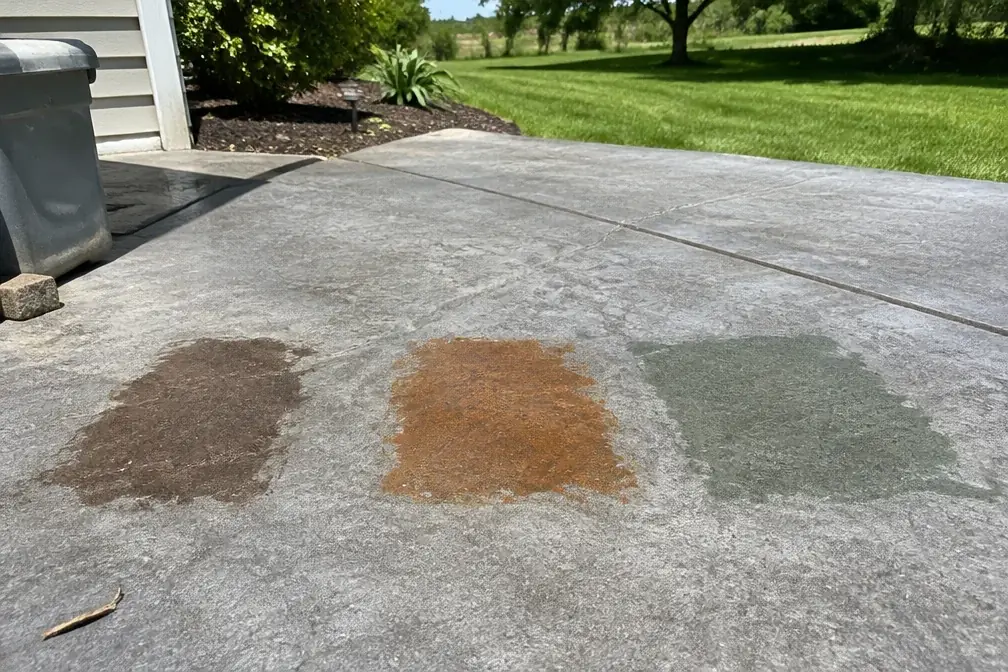
| Color family | Acid stain | Water-based stain |
|---|---|---|
| Browns and tans | Yes, the classic look | Yes |
| Rust and terracotta | Yes, and very natural | Yes |
| Soft greens | Yes, with a mottled look | Yes |
| Grays | Limited | Yes, and more even |
| Black | Possible, but can be uneven | Yes |
| Blues and bright colors | No | Yes |
Why your slab changes the color
A stain isn't a coat of paint. It sinks into the concrete, and what you see is the stain plus the slab beneath it. Age, cement content, finish and past repairs all change the result. A steel-troweled area can take less stain than a broom-finished one. An old patch will take the color differently from the slab around it. Salt-damaged areas may turn darker.
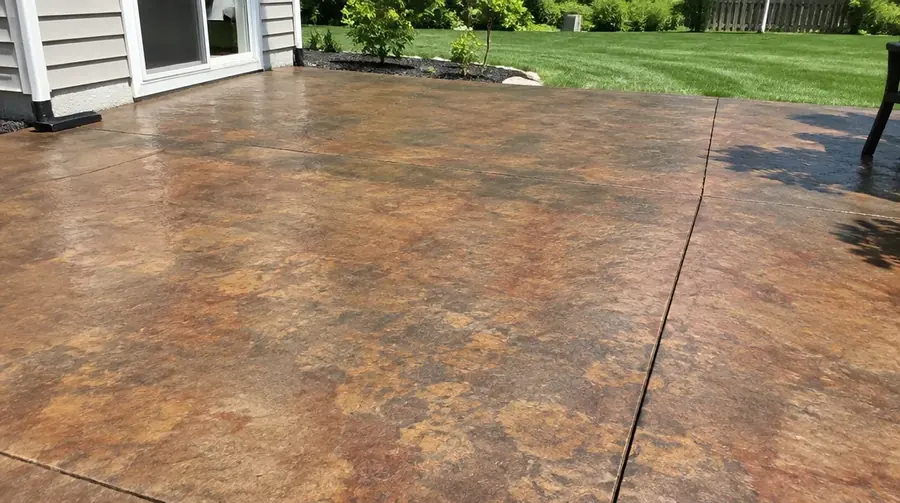
That's why charts are only a starting point. Acid stains are the most variable of all, as they react with the lime in the concrete, and that varies across a slab. Many people love the marbled, aged look that results. If you'd prefer something flatter, a water-based or solid-color stain gives you much more control.
Colors that work outdoors
Outdoor concrete has to live with its surroundings. These are the colors that tend to work on Pittsburgh patios and porches.
- Warm tans and sandstones, which pair well with red brick
- Soft browns, which hide dirt and suit older homes
- Rust tones, which give a slab an aged, stony look
- Mid grays, which work well next to painted brick and siding
- Dark charcoal, which looks modern but gets hot in sun
- Muted greens, which sit well near planting
Solid or semi-transparent?
A semi-transparent stain lets the concrete show through, so it looks natural, and it won't hide stains or patches. A solid-color stain or coating looks more like paint. It covers much better, but it sits on the surface and can wear off or peel on a slab that gets wet from beneath. On outdoor concrete in a freezing climate, we lean toward the penetrating options and only use a film where the slab is dry.
Dark stains deserve a special note. Black and very dark grays can look striking, but they show dust, and they make a sunny patio hot underfoot. They also make any wear stand out more over time.
Test before you commit
Always try a stain on a hidden part of the slab, and wait until it's dry and sealed to judge it. Stain looks different at each stage. Sealer deepens the color and brings up contrast, so it's worth sealing the test patch too. Look at it in the morning and in the afternoon. We test before every staining job, and we won't start the main area until you've seen it.
How much stain changes a patio
Stain can't change the texture of a slab, only its color. A rough, worn patio will still be rough, though it may look richer. A clean broom-finished slab usually takes stain well, and a smooth covered porch can look striking. If you're after the look of stone, you'd want a pattern as well, and that means an overlay or a stamp. If you just want an old gray slab to look warmer and more finished, stain is often all you need.
It's also a much smaller job. A stained patio usually takes two or three days, with little mess and no demolition, and you'll usually pay less than half of what a stamped slab costs. That makes it a good choice for a rental, a slab you might replace later or a patio that's fine except for how it looks.
Two-tone and layered effects
Stain doesn't have to be one flat color. Two colors applied in layers add depth, with a lighter tone below and a darker one sponged or sprayed on top. Saw-cut lines can separate colors into a grid or a border, which gives a tile effect at a low cost. Keep any scheme simple. A border one shade darker than the field almost always looks good, whereas a busy design can date quickly.
Stencils are also an option for a pattern on a flat slab, though they sit better indoors or on covered porches. Outdoors, freezing and wear are harder on fine detail.
Staining stamped concrete
Stain can also bring back a faded stamped slab. The old sealer has to be stripped first, and the stain then adds depth to high spots and grooves. It's a good way to change a color that you've grown tired of, too, without having to tear out the patio. A tinted sealer is a lighter option for slabs that only need a boost. See stamped concrete repair for how we restore old slabs.
Preparing the slab
Stain needs an open, clean surface. The prep decides how it turns out.
- Strip old sealers, paints and coatings
- Degrease oil spots, as they will show
- Clean with a mild detergent, never with acid first
- Repair cracks, knowing that the repairs may show
- Let the slab dry before you apply a water-based stain
- Check that a water drop soaks in, as that means the slab is open
Stain, dye or colored sealer?
These three get mixed up all the time. Stain soaks in and stays with the slab. Dye is thinner, and it's better indoors, as sunlight can fade it. A colored sealer sits on the surface and adds a tint along with protection, so it's a quick way to freshen a slab, but it wears away with the sealer. For a patio or porch outdoors, a stain with a clear sealer on top is usually the longest-lasting choice. It costs a little more at the start, but you won't need to redo it as often, and it won't peel the way a film can.
Upkeep and when stain is not enough
Outdoor stain needs a sealer, and it needs resealing about as often as stamped concrete does. Full sun will fade some colors slowly, and foot traffic can wear down high spots. A fresh coat of stain can usually bring it back. Stain won't hide a badly damaged slab, however. If the slab is flaking, consider a stamped concrete overlay. To have a slab stained for you, see concrete staining.
Common questions
Should I seal my concrete slab?
Yes, after staining. Sealer protects the color and keeps out water and salt.
Should I seal my concrete sidewalk?
It helps, particularly near the street. A penetrating sealer won't change the look much.
Should I seal my concrete pavers?
It's optional, but it can make them easier to clean and bring out the color.
More services
- stamped concrete
- stamped concrete patio
- concrete patio contractors
- stamped concrete walkway
- stamped concrete steps and porches
- stamped concrete pool deck
- stamped concrete overlay
- stamped concrete sealing
- stamped concrete repair
- concrete staining
- decorative concrete
- colored concrete
- decorative concrete driveway